Styling Tips
Fall Scent at Home: Layer Warm Fragrance for November
Guests notice your home's scent before they notice anything in it - one warm fragrance, layered room by room, is all November needs.
By Rae Bennett · · 7 min read
Thanksgiving is sixteen days away, and the house does not need another purchase to feel ready for it. It needs one thing guests will notice before they notice anything else: scent. The moment the door opens, before anyone sees the table or the mantel, the house has already introduced itself. In November that introduction should be warm, quiet, and collected - not a perfume shop, and not five different candles competing from five different rooms.
This is a scent guide, not a decorating guide. It is not about swapping a room, the way our fall bathroom swaps worked, where a warm scent was only one small item on a longer list. And it is not about light, either. Our guide to layering light in a room treated the candle as a light source; here the candle is a scent source, and the light it gives off is only a bonus. The rule for the whole month is simple: choose one signature scent family for the entire house, then deliver it differently in each room. One fragrance, many methods. That is what layering means here.
If you already did the November reset, scent is the finishing layer it was waiting for. The base is warm neutrals, dried stems, and calm surfaces, and scent sits on top of it the way a throw sits on a sofa: it changes how the room feels without changing a single object.
Step one: choose one signature scent family
Pick one of these three families and let it run the whole house for the month. Switching families mid-month is how a house ends up smelling like a candle sale.
Warm spice. Cinnamon, clove, and nutmeg, with a little orange peel to keep it bright. It is the easiest to build from the pantry: cinnamon sticks, whole cloves, and a dried orange slice are the whole kit. Its hero product is a spiced candle in amber glass. Choose spice if Thanksgiving dinner is the main event you are building toward.
Cedar and woodsy. Cedar, amber, and sandalwood, with a dry, clean edge rather than a sweet one. This family suits houses that feel more collected than cozy - more wood, more linen, fewer throws. Its hero product is a cedar sachet or a small bottle of cedar linen spray, tucked into a drawer or misted over bedding. Choose woodsy if sweet scents give you a headache, or if you prefer the house to smell like a well-kept room rather than a bakery.
Orchard. Apple, orange, and vanilla, the lightest of the three. It reads fresh rather than heavy, which makes it the safest choice for a small home or a house with guests who are sensitive to scent. Its hero product is a simmer pot on the stove: sliced apple, orange, cinnamon, and vanilla, warmed in water an hour before people arrive. Choose orchard if your kitchen is where everyone gathers.
Whichever family you choose, commit to it for the month: one family, one house. Every method below just delivers that same family differently, so no two rooms argue with each other.
Step two: layer it room by room, one source per room
The second rule is just as strict: one scent source per room, and never more than two different fragrances in the whole house at once. A room with a candle, a diffuser, and a plug-in does not smell three times as good - it smells confused. Give each room a single job, matched to how it is actually used.
The living room gets the candle. This is the room guests sit in longest, and a candle is the only scent source that also gives light, which is exactly what a dark November evening needs. Keep it on the coffee table tray - amber glass, one candle, not a cluster - and light it an hour before guests arrive. A candle needs twenty minutes to throw its scent, and a tray keeps the arrangement to one contained spot. The dried orange and cinnamon keep a faint scent even unlit.
The kitchen gets the simmer pot. Nothing in this guide is cheaper or more effective. Fill a small pot with water, a sliced apple, a sliced orange, three cinnamon sticks, a few whole cloves, two star anise, and a splash of vanilla. Bring it to a gentle simmer an hour before guests arrive, then turn it to the lowest heat and top up the water when it drops. The steam carries the scent through the whole ground floor while coats come off and the oven warms. It is the most forgiving method in the house: too strong, add water; fading, add a cinnamon stick. Never leave it unattended, and never let it boil dry.
The bedroom gets cedar, and nothing lit. Bedrooms are for sleeping, and a lit candle has no business on a nightstand. Tuck a cedar sachet into the linen drawer or wardrobe, and keep a small amber bottle of linen spray on the nightstand. One light mist over the pillows in the morning is enough; the scent settles into the linen and stays there quietly all day. In our guest room guide, the essentials basket and layered bedding do the welcoming, and scent is only one quiet detail. A guest waking in a strange bed should smell clean linen, not a candle shop.
The entryway gets dried citrus and eucalyptus. The entryway is the first scent a guest meets, so it should be the lightest in the house. A ceramic vase of dried eucalyptus on the console does the work on its own, and a small reed diffuser beside it adds a steady, flameless note that never needs lighting or watching. Dried orange slices in a small bowl add color without a second fragrance. Keep the entryway in the same family as the living room, so the house reads as one home from the door inward.
The bathroom gets almost nothing. A small sprig of fresh eucalyptus hung from the shower head, or a single sachet in the linen cupboard, is the whole assignment. Bathrooms already hold soaps and lotions with their own scents, and a candle on top of those is how a small room becomes overwhelming. If it already smells clean, leave it alone.
The same logic reaches the quiet corners. The reading nook needs no scent of its own: the living room candle a few feet away is already doing that job, and a book, a lamp, and a cup of tea are enough for a corner built for sitting.
The 15-minute scent reset before guests arrive
On the day people come over, run this once, an hour before the doorbell. Open the windows for ten minutes, then close them. Put the simmer pot on low. Light the living room candle. Mist the guest bedding once, if anyone is staying over. Then stop - it takes less time than setting the table.
What you should not do in that hour is add a new scent because the house "doesn't smell like anything yet." Noses adjust to their own house within minutes, so the person least qualified to judge the scent is the one who lives there. Trust the method instead: one family, one source per room, started an hour early.
Three guards: overload, sensitivity, and safety
Overload. If you can smell the house from the front path, it is too much. Extinguish the candle, add water to the simmer pot, and open a window for five minutes. The goal is a house that smells warm when you step inside, not one that announces itself from the street. Two fragrances is the absolute maximum; one is better.
Sensitivity. Some guests get headaches from strong scent, and some simply dislike it. Never put a strong scent source on the dining table or in a bedroom where someone has to sleep. Keep the strongest scent in the largest room, where it has air to spread, and keep the guest room and the table light. If a guest is sensitive, skip the candle that evening and let the simmer pot do the work from the kitchen, where it can be turned down in seconds.
Safety. A candle or a simmer pot is never left unattended, and never left burning in an empty room. Candles sit on a tray, away from curtains, throws, and dried stems. The simmer pot stays on the lowest heat, with water topped up, and goes off the stove before the last guest leaves. For rooms where a flame is a bad idea - a child's room, a small bathroom, a hallway with coats - use the flameless options: a reed diffuser, a sachet, or a spray. They are not the lesser choice. They are the right choice for that room.
Collected, not decorated
November scent works when it follows the same rule as everything else in this house: collected, not decorated. A cinnamon stick from the pantry, dried orange from last week's baking, a cedar sachet from the drawer, a candle you already own. None of this needs a shopping trip. What it needs is one decision - a single scent family - and the discipline to let it run the whole house for the month.
Thanksgiving will bring its own smells soon enough: the oven, the table, a house full of people. Until then, let November smell like itself - one warm fragrance, layered room by room, lit an hour before the doorbell, and put away safely when the evening ends.
Frequently Asked Questions
What is the best fall scent for a whole house?
One signature family, not a mix - warm spice (cinnamon, clove, nutmeg), cedar-woodsy (cedar, amber, sandalwood), or orchard (apple, orange, vanilla). Pick the one that fits your palette and use it in every room.
How do I make my house smell like fall without candles?
Use a simmer pot with sliced apple, orange, cinnamon sticks, cloves and star anise, or a reed diffuser and cedar sachets. Both are flameless-friendly and carry scent through the house without an open flame.
How many different scents should a house have at once?
No more than two, and one is better. Give each room a single scent source in the same family so the rooms never compete with each other.
How long before guests arrive should I light a fall candle?
About an hour before. A candle needs twenty minutes to throw its scent properly, and starting early means the house smells warm at the door, not just at the coffee table.
Is it safe to leave a simmer pot on while guests are over?
Yes, on the lowest heat with the water topped up, and never unattended. Turn it off before the last guest leaves and never let it boil dry.
Written by
Decorating Editor
Rae Bennett is the decorating editor at The Curated Interior, where she writes practical guides to color, texture and warm, collected rooms.
Related Stories
Layering Texture for November: Knit, Wool and Linen
Color sets the mood, but texture makes a room feel warm - here is how to layer knit, wool and linen in one warm-neutral family, without buying a new room.
Rae Bennett · Nov 8, 2026
Styling Open Shelves for Fall: Collected, Not Cluttered
Open shelves look collected when you edit first and style second: group in threes, leave breathing room, and make one warm fall swap per shelf.
Rae Bennett · Nov 6, 2026
More From Decorating
A November Linen Closet Reset Before Guests Arrive
Thanksgiving is seven days away. Before guests arrive, reset the one closet that decides whether a bed gets made in two minutes or after a load of laundry.
Rae Bennett · Nov 19, 2026
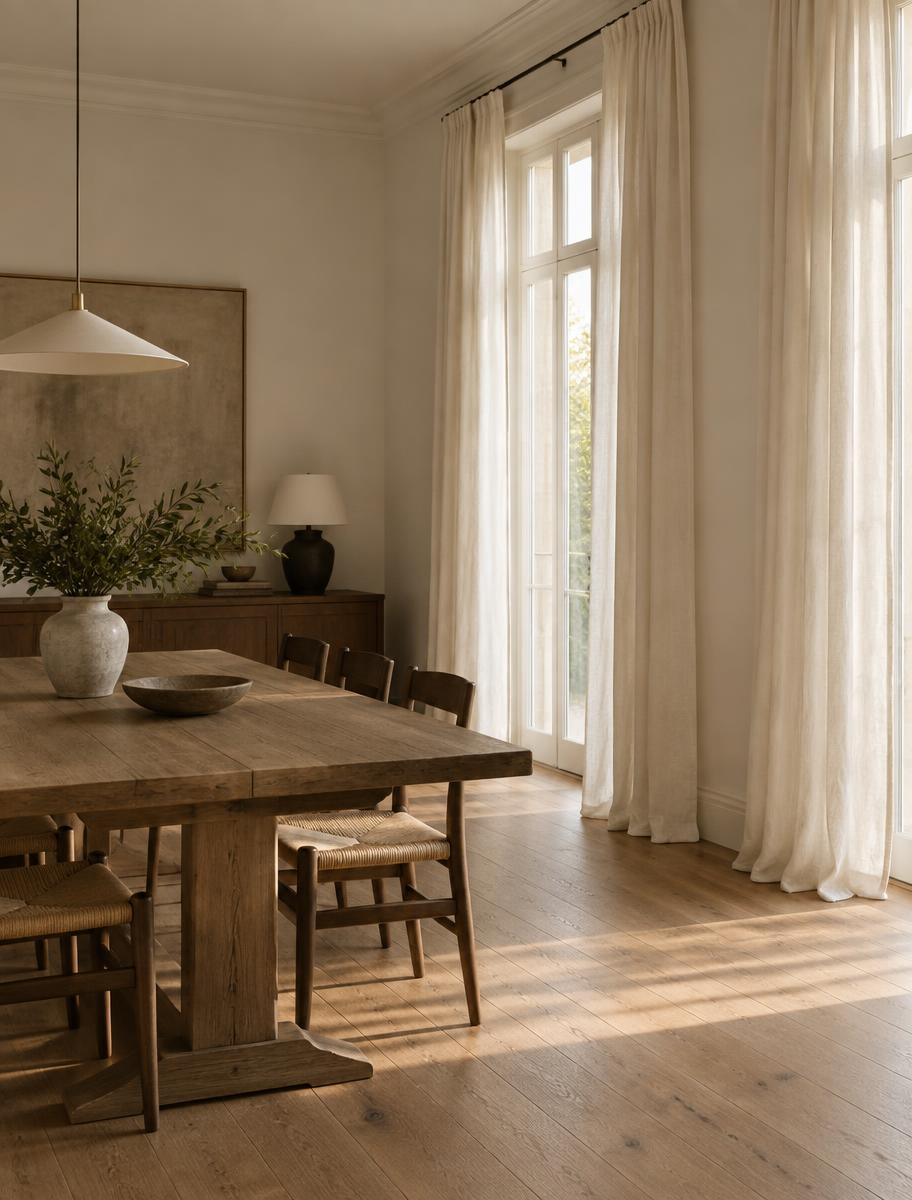
A Guide to Curtain Lengths and Hanging Height
Thoughtful rod placement and well-measured panels can make windows feel more balanced.
Marcus Thorne · Nov 11, 2026

Rug Sizing Rules for a More Cohesive Room
Choose a rug that connects furniture and leaves enough breathing room around the edges.
Marcus Thorne · Nov 10, 2026
The Curated Note
A weekly letter on rooms, materials, and the details that make a home feel considered.
One edition each week: a room we're studying, a decorating principle worth borrowing, and the materials we keep returning to. No noise, no selling.
Discussion
Loading comments…