Rugs
Warm Floors for November: Wool Rugs and Woven Layers Underfoot
Guests arrive in 17 days, and the fastest way to make the house feel warm is underfoot: one large neutral base rug, one smaller wool rug on top, and a single soft touch where bare feet land.
By Rae Bennett · · 7 min read
November changes a house from the floor up. The light drops earlier, the evenings stretch longer, and the first thing your feet meet in the morning is a cold floor. Thanksgiving is 17 days away, on November 26, and guests will judge it with their feet before they notice anything else. The fastest way to warm it is not a new sofa. It is the floor: one large neutral base rug, one smaller wool rug layered on top, and a single soft touch where bare feet actually land.
Yesterday's guide to layering texture started at the floor with one move - a wool rug over jute - and then moved on to knit throws and linen. This guide stays on the floor for the whole read: the three materials, the layering method, and the guards that keep layered rugs safe. It is not a rug-size guide either - our September guide already settled the measurements. Everything here sits on our seasonal base, so the floor layers borrow the same warm-neutral palette the rest of the house already has.
The three materials, and what each one does
Three materials do almost all the work, each one a different job - learn the jobs first, or two layers will feel the same and the room will still feel cold.
Jute and sisal are the base, not the warmth. A woven jute rug gives a room its texture: rough fiber, visible weave, a sandy neutral that sits quietly under furniture. It is the cheapest way to cover a large area in the big sizes a base layer needs. What it does not give is softness - bare feet feel that immediately. That is fine, because jute is not the layer your feet are meant to meet; it is the layer your eyes meet. Two limits matter: jute does not handle moisture, so it never goes in a wet entryway, and it sheds loose fibers for the first weeks, so vacuum it twice as often at the start.
Wool is the warmth. Wool insulates, holds warm dyes beautifully, and outlasts almost every other rug fiber - a good wool rug runs 20 to 30 years with basic care. That is why it is the top layer, the one feet actually touch. Fall 2026's rug demand backs this up: natural wool fibers, high-pile shag textures and rich brown earth tones are what buyers are reaching for this fall. Wool also takes color the way jute cannot, which is why the top rug is where the warm tone lives: rust, ochre, clay or deep camel, while the base stays quiet. Vacuum it with the beater bar off, so the pile stays plush instead of fuzzing.
Sheepskin and faux fur are a touch point, never a layer. One sheepskin by the bed, or one small faux-fur runner by the shower, is the whole job. It is the softest thing in the room, and that is exactly why it must stay small: a whole room of it reads as a costume, and a sheepskin under furniture slides and trips. Keep it where bare feet land in the morning and shake it out weekly.
That is the whole cast: jute underneath for texture, wool on top for warmth, sheepskin in one spot for softness. Wood, ceramic and brass stay quiet and let the floor do the talking.
The layering method: base, top, border
Layering rugs has one rule that decides whether the result looks deliberate or accidental: the border. The base rug must be visibly larger than the top rug on every side, with 15 to 20 centimeters showing all round. That strip of jute framing the wool is what tells the eye the layering was a choice; without it, the two read as one rug that does not fit.
Start with the base. The base is large, flat and quiet: a natural jute rug or a low-pile flatweave in cream, oatmeal or natural tan, sized to the room rather than the furniture. Our rug size guide has the measurements room by room: the base should sit under the front legs of the seating, with bare floor showing between the rug edge and the wall. A base that is too small is the most common mistake, and no top rug can fix it.
Then the top rug. The top rug is smaller, denser and warmer: a plush wool rug with a subtle pattern or a warm solid color. Vintage-style kilims in warm reds and golds are the classic choice over jute, and fall 2026's palette has moved firmly that way - away from cool gray, toward terracotta, sage, ochre and clay. Set the top rug at a slight angle if the room allows it, then pull the furniture forward so the front legs of the sofa and chairs sit on the top rug, not on the bare base. Legs on the rug anchor the seating area; legs off it make the top rug look like a mat that drifted.
Then the pad, always. A rug pad goes under the base rug, and a thinner grip layer goes between the two rugs. Without it, the top rug creeps a few centimeters every day, corners curl, and someone trips. If a corner still lifts, a strip of rug tape on the underside holds it flat.
Keep one warm tone throughout. The base stays neutral, the top rug carries one warm tone, and the sheepskin stays cream. One tone family - cream, oatmeal, rust, walnut - keeps the floor calm. A second strong color on the floor turns a study into a scheme.
Layer it room by room
The living room is where the full stack lives: jute base, wool rug on top, sofa and coffee table legs on the top rug. Keep the rest of the floor clear - no third rug, no runner trailing toward the kitchen. One layered area per room is the limit, and the living room earns it because guests stand there longest.
The bedroom needs the lightest touch. The bed already has its own layers, so the floor gets exactly one: a sheepskin or a small wool runner beside the bed, where your feet land in the morning. In a guest room, the same runner is the kindest detail you can add before visitors arrive - our guest room guide put a rug beside the bed on its arrival checklist. Nothing else on the bedroom floor: a layered rug under the bed is wasted, and it makes the bed harder to make.
The hallway and entryway play by different rules, because they are the wettest and busiest floors in the house. Here the base is not jute at all: a washable, low-pile runner in a warm stripe, 80 centimeters wide with 10 to 20 centimeters of bare floor showing on each side. Low pile lets doors swing clear and survives the vacuuming a hallway needs every few days. Jute stays out of the entryway entirely - wet shoes and natural fiber do not mix, and a damp jute runner smells before it dries.
The dining room is the one room to skip. Chairs slide in and out a dozen times per meal, and a top rug under a dining table catches chair legs, ripples and stains. One single flat rug under the table, sized so chairs stay on it when pulled out, is the answer there. Layering is a seating-area move, not a dining-table one.
What to buy, and what to skip
Buy once, use all winter: one wool rug in the right size if your floor is bare, one rug pad for each layer, and one sheepskin runner for the bedside. The wool rug is the only real purchase - the pad is cheap, and the sheepskin is small.
Skip: a matching set of two rugs in the same weave, which reads as a set rather than a layer; a second top rug for a room that already has one; a themed rug that expires with the season; and a jute rug for the entryway, however good it looks in the shop. The most expensive mistake is buying the top rug before measuring the base.
Mistakes that make layered rugs look messy
A top rug almost the same size as the base. Without the 15 to 20 centimeter border, the layering disappears and the floor looks like a rug too small for its underlay. Measure the border before you buy.
Two busy patterns. One patterned layer is the limit: a patterned kilim over a plain jute base works, but over a patterned flatweave it argues with itself. If the top rug has a pattern, the base must be quiet.
Skipping the rug pad. Layers without a pad ripple, curl and travel. The fix costs less than the rug and takes five minutes - the pad is never optional.
Layering over plush carpet. Layered rugs belong on hard floors: on deep carpet the base sinks, the top rug ripples and the border vanishes. On very low-pile carpet a flatweave base with a thin pad can work, but plush carpet is a no.
Layering every room. A layered floor in the living room, the bedroom and the hallway in one weekend is not warmth, it is a theme. Pick the rooms where feet spend time - the living room first, the bedside second - and leave the rest alone.
That is the whole project: one large quiet base, one smaller warm top, one soft touch where feet land, and a pad under all of it. By Thanksgiving the house will feel warm before anyone touches the thermostat - and the warmth will still be there in January, because wool and jute do not expire with the season.
Frequently Asked Questions
How much bigger should the base rug be than the top rug?
The base should show a 15 to 20 centimeter border all round the top rug, and sit under the front legs of the seating. Our rug size guide has the room-by-room measurements.
Can you layer rugs on carpet?
Only on very low-pile carpet, with a flatweave base and a thin rug pad. On plush carpet the layers sink and ripple, so layered rugs belong on hard floors.
Is jute a good rug for fall?
Jute gives texture and a large neutral base, but it is not soft or warm on its own, so it needs a wool rug on top. Keep it dry and out of wet entryways.
Will layered rugs slip?
Not with a rug pad under the base rug and a thinner grip layer between the two rugs. Tape any corner that still lifts.
Can I layer rugs in a small room?
Yes: one base and one small top rug, with the border still visible. Skip a third layer and keep the rest of the floor clear so the room reads as layered, not crowded.
Written by
Decorating Editor
Rae Bennett is the decorating editor at The Curated Interior, where she writes practical guides to color, texture and warm, collected rooms.
Related Stories
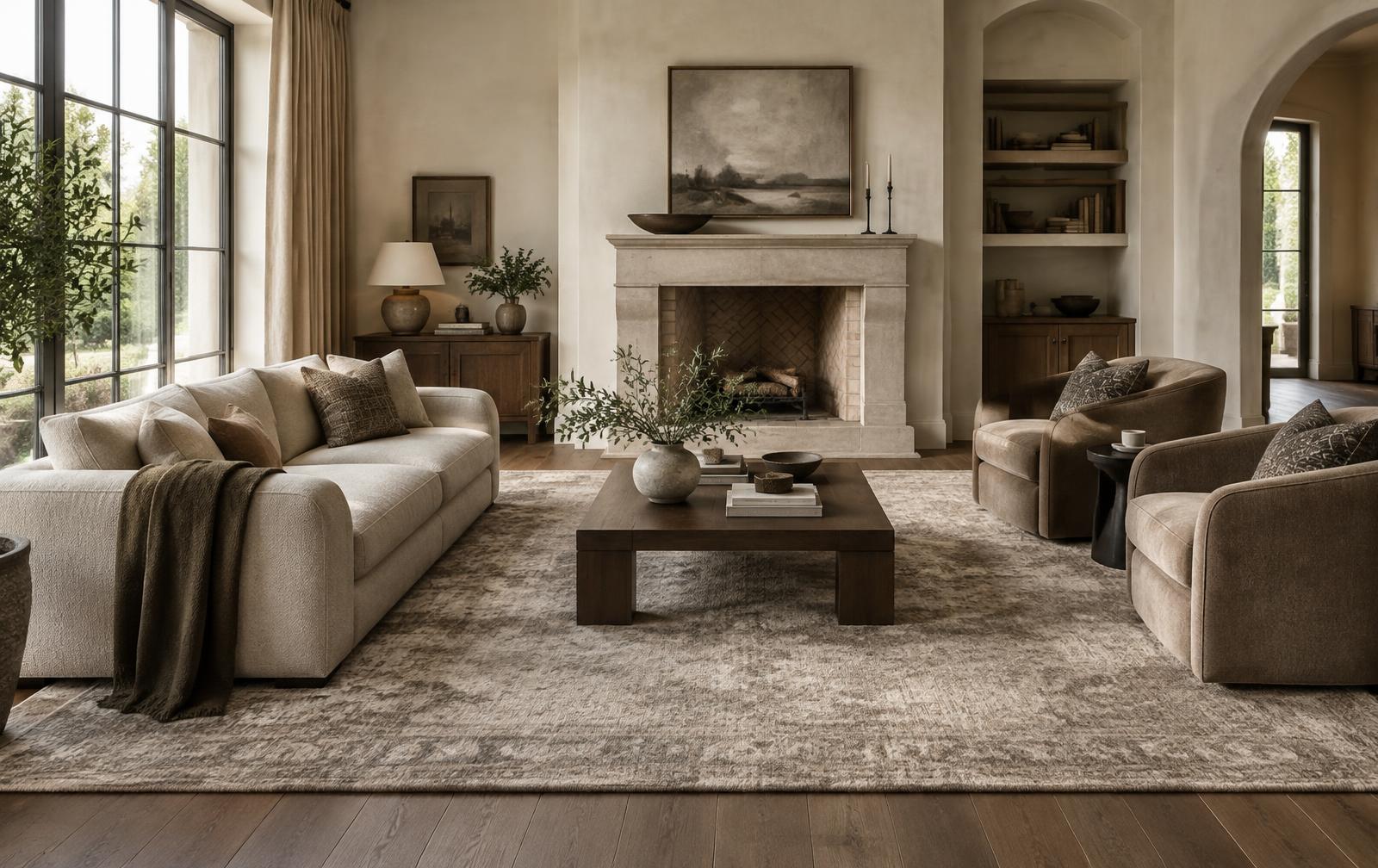
Rug Sizing Rules for a More Cohesive Room
Choose a rug that connects furniture and leaves enough breathing room around the edges.
Marcus Thorne · Nov 10, 2026
More From Decorating
A November Linen Closet Reset Before Guests Arrive
Thanksgiving is seven days away. Before guests arrive, reset the one closet that decides whether a bed gets made in two minutes or after a load of laundry.
Rae Bennett · Nov 19, 2026
A Guide to Curtain Lengths and Hanging Height
Thoughtful rod placement and well-measured panels can make windows feel more balanced.
Marcus Thorne · Nov 11, 2026
Rug Sizing Rules for a More Cohesive Room
Choose a rug that connects furniture and leaves enough breathing room around the edges.
Marcus Thorne · Nov 10, 2026
The Curated Note
A weekly letter on rooms, materials, and the details that make a home feel considered.
One edition each week: a room we're studying, a decorating principle worth borrowing, and the materials we keep returning to. No noise, no selling.
Discussion
Loading comments…