Living Room
A Quiet November Mantel: Edit Your Fall Mantel for Hosting Season
Remove the Halloween layer, keep the warm anchor, and make one quiet swap - a November mantel edited for hosting, not redecorated.
By Rae Bennett · · 7 min read
Halloween is over, and the mantel is the first place that shows it. The black candles, the dark florals, the pieces that only ever read as spooky - they had their month, and now they make the whole living room feel stuck in October. The good news is that November does not ask for a redecoration. It asks for an edit.
This is a different job from the two guides that came before it. Our seasonal base guide built one warm foundation for the whole house from October through December, and our November reset walked room by room through the house after Halloween. This guide goes deep on a single surface: the mantel, the focal point guests actually look at when they walk in and when they sit down. Keep the warm anchor, remove the tired layer, and make exactly one swap. The result is calm, almost winter, and ready for Thanksgiving hosting on November 26, twenty-three days from now, without a single new theme.
The five-step edit
Work in this order, and do not skip ahead to shopping. Editing first is what keeps November from becoming another decorating project.
- Remove. Take down everything that only reads as Halloween: black taper candles, skulls, bats, orange novelty pieces, and any dark floral that was bought for spooky effect rather than for fall. Box them promptly. Keeping one or two "for a few more days" is how a mantel stays stuck in October.
- Keep. Keep the anchor and the base: the leaning art or mirror, the ceramic vessels, the brass candlesticks, the cream candles, and any dried stems that still look fresh. A simple test helps: would this piece still look right in January? If yes, it stays. If it only worked in October, it goes.
- Tighten. Now reduce what is left to its strongest sixty percent. If five objects stood on the shelf, keep three. If a garland looked full in October and now looks dusty, trim the tired ends rather than adding more to hide them. A mantel with breathing room reads as intentional; a full one reads as tired, however good the individual pieces are.
- One swap. Add a single new element, and only one: a dried magnolia or preserved oak garland along the ledge. One swap is the whole point. Two or three new purchases turn an edit back into a redecoration, and the mantel loses the calm you just created.
- Light. Finish with candlelight. Replace any candle that has burned low, check that the holders are clean, and light one taper in the evening to test the effect before guests arrive. Warm light is what makes the edited mantel feel finished rather than emptied.
Start with what stays: the warm anchor
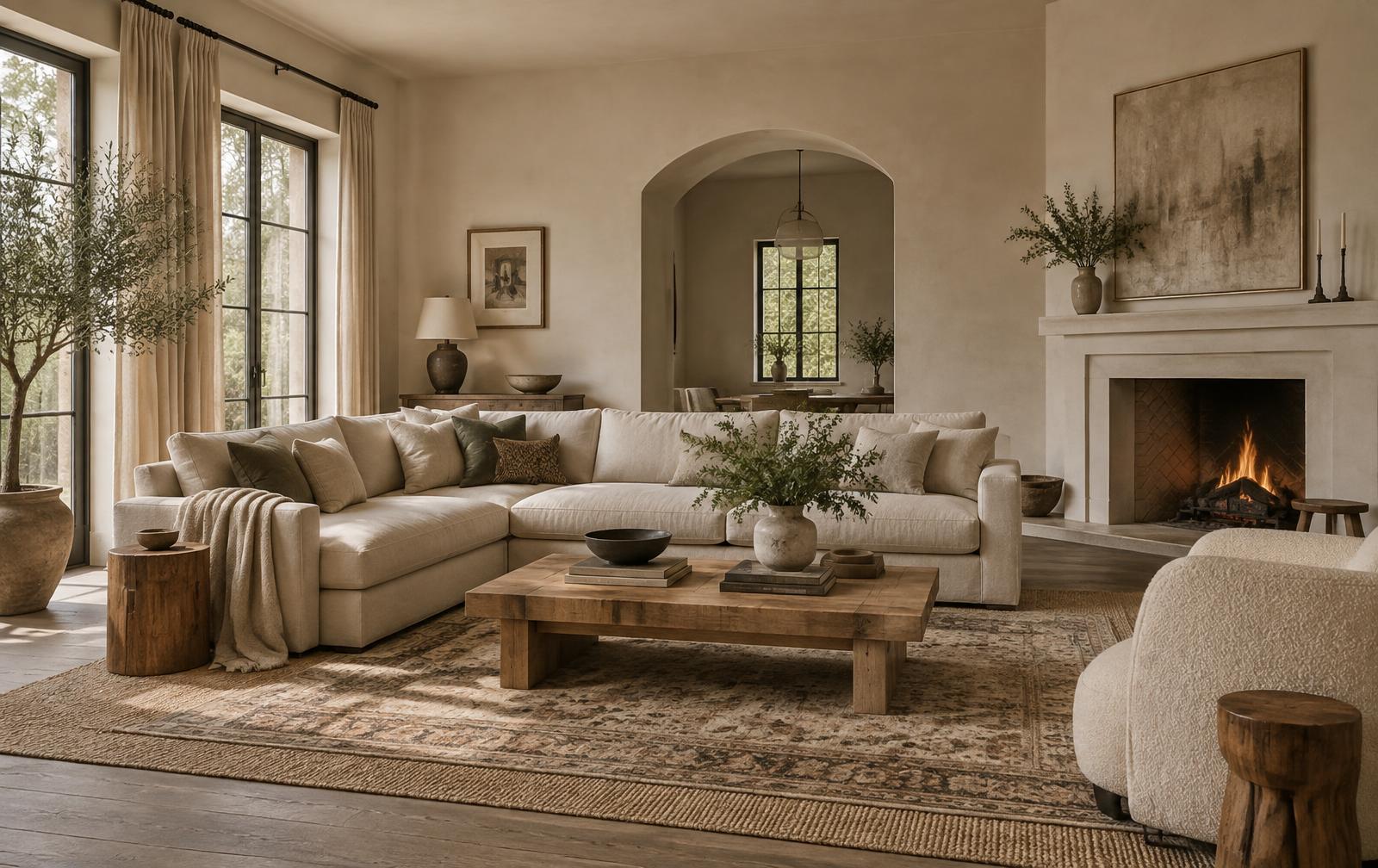
Every good November mantel has an anchor, and in most homes it is already there. A leaning landscape painting in a gilt frame, a round mirror, or one tall ceramic vessel gives the eye a place to rest, and everything else arranges around it. Do not move the anchor unless it is genuinely wrong for the room. The edit works because the structure stays familiar while the seasonal layer changes.
Vessels and metals do the same quiet work. A cream ceramic vase, aged brass candlesticks, and a stack of cloth-bound books are not Halloween pieces and never were. They belong to November just as much as they belonged to October, and they will still belong in January. That continuity is the definition of collected rather than decorated: pieces gathered over time, not bought as a set for one month.
The one swap: dried magnolia or preserved oak
If the anchor stays and the Halloween layer goes, the mantel still needs one signal that the season has moved on. That signal is a dried magnolia garland, or preserved oak branches if magnolia is hard to find. Magnolia works because its leaves are two-toned, velvety brown on one side and muted green on the other, so it reads warm without reading orange, and it holds its shape for weeks without shedding all over the shelf.
Drape it simply. Lay the garland along the ledge with a gentle dip in the centre and a short drop at each end, roughly the length of your hand, rather than a dramatic swag that fights the candlesticks. Let it sit behind the vessels and in front of the art, never in front of a candle flame. If the garland is faux, choose one with varied leaf sizes and a matte finish; a shiny, uniform garland is what makes a mantel look store-bought.
This is also the moment to check the rest of the shelf against the new garland. If the dried oak stems in the vase echo the garland, keep them. If a second, competing foliage is fighting it, remove the weaker one. One foliage story per mantel is enough.
Three compositions that work
With the anchor kept and the garland in place, the remaining objects need a composition, not a pile. Three arrangements cover almost every mantel.
Symmetrical calm suits a formal room or a wide mantel. Centre the art or mirror, place a matching pair of candlesticks or vessels at equal distances on each side, and let the garland run evenly underneath. Symmetry feels calm because the eye knows where to go. The risk is stiffness, so break it slightly: let one candlestick be a touch taller, or let the garland dip a little lower on one side.
Off-centre collected suits a room full of gathered pieces. Put the tall anchor, a vase of dried oak stems, to one side rather than the centre, then balance it with a lower, wider group on the other side: a stack of books and a pair of brass candlesticks. The balance is visual weight, not matching height, and it is the most forgiving composition when your pieces come from different decades.
Minimal shelf suits a small mantel or a room that already has plenty going on. One leaning mirror, one ceramic vessel, one pair of candlesticks, and the garland, with clear space at both ends. The empty ends are not unfinished; they are what make the three groups read as chosen. If your mantel is narrow, this is the composition to pick, and it is the easiest to keep dusted through a busy hosting month.
Whichever composition you choose, step back to the doorway and look at it from where guests will stand. A mantel styled from two feet away almost always looks crowded from ten feet away, and the doorway view is the honest one.
Candlelight, and a note on a working fireplace
Candlelight is the final layer, and in November it matters more than any object, because the evenings are dark by the time guests arrive. Use cream or beeswax tapers in brass holders, and keep the heights varied: one tall, one shorter, never a row of identical candles that reads as a set. It is the same low, layered light that makes a reading nook feel like an escape after dark. Light one taper in the evening and live with it for a night before you decide the mantel is done.
A working fireplace needs one extra rule. Dried foliage is combustible, so keep the garland and any dried stems well clear of the firebox opening, never draped over it, and never lit candles directly above an open flame. If you light real fires often, choose flameless tapers for the mantel itself and keep real candles on a side table instead. Never leave lit candles unattended, and never let a garland hang where a spark could reach it. Flameless candles in brass holders look convincing from the sofa, which is where anyone will actually see them.
What to skip in November
November has its own traps, and the mantel collects all of them. Do not jump to Christmas greenery on the first weekend of the month. Cedar and pine belong to December, and putting them up now makes Thanksgiving feel like an afterthought and leaves nothing fresh for the holidays. Do not add a loud new colour either. The November palette is already in the room: cream, oatmeal, soft brown, aged brass, and the muted green of dried leaves. A deep red or bright green now will fight the Thanksgiving table later.
Do not buy a full set of anything before you have edited what you own. Most November mantels need one garland and perhaps one pair of tapers, not a new collection. And do not style every inch. A mantel with three considered groups and clear space at the ends reads as finished. A mantel with no clear space reads as storage, however expensive the pieces are.
Thirty minutes to hosting-ready
Set a timer and finish the edit in one sitting. Ten minutes to remove the Halloween layer and box it. Five minutes to tighten what remains to its strongest pieces. Ten minutes to drape the magnolia garland and place the candlesticks. Five minutes to light one taper, step back to the doorway, and remove one more thing. That last removal is almost always the right call.
Then leave it alone until Thanksgiving week. The only job between now and November 26 is maintenance: dust the shelf once, replace a taper that has burned low, and trim any magnolia leaf that has curled badly.
Frequently Asked Questions
When should I take Halloween decor off the mantel?
On November 1, or as soon as Halloween is over. Pack the spooky pieces away promptly and keep the fall base - ceramic vessels, brass candlesticks and cream candles - that works all month.
What should I put on a mantel in November?
Keep the warm anchor, add one dried magnolia or preserved oak garland, and finish with cream tapers in brass holders. Avoid Christmas greenery until December.
How do I style a mantel without making it look cluttered?
Use three groups at most, leave clear space at both ends of the shelf, and step back to the doorway to check the view guests will actually see.
Is dried magnolia safe above a working fireplace?
Only with clearance. Keep dried foliage well away from the firebox opening, never drape it over the fire, and use flameless tapers on the mantel if you light real fires often. Never leave lit candles unattended.
Can I use faux magnolia instead of dried?
Yes. Choose a matte garland with varied leaf sizes and two-toned leaves, and drape it the same way - a gentle dip in the centre and a short drop at each end.
Written by
Decorating Editor
Rae Bennett is the decorating editor at The Curated Interior, where she writes practical guides to color, texture and warm, collected rooms.
Related Stories
Warm Minimal November Living Room: Less Decor, More Glow
Before guests arrive, do not add a thing - take things away. Clear the surfaces, keep two focal zones, and let warm light do the decorating.
Rae Bennett · Nov 15, 2026
How to Layer a Living Room: Rugs, Lighting and Texture
A practical guide to balancing tactile materials, grounded furniture and warm pools of light.
Eleanor Vance · Nov 13, 2026
A Cozy Reading Nook for November's Dark Evenings
When the evenings darken an hour earlier, you do not need a new room - just one good chair, warm light, and a corner that is always ready for a book and a cup of tea.
Rae Bennett · Nov 1, 2026
More From Rooms
A Christmas Dining Table That Stays Warm After Thanksgiving
The changeover weekend's second day belongs to the dining table: one plaid runner, a low evergreen centrepiece, brass candlesticks and cream plates - dressed in one morning, from things the house already owns.
Rae Bennett · Nov 28, 2026
A Warm November Bathroom Shelf: One Surface Before Guests Arrive
Thanksgiving is four days away. One shelf is all a guest will really see - fold the towels one way, set a tray of essentials, and leave a third of it empty.
Rae Bennett · Nov 21, 2026
A Thanksgiving Kids' Table: Small, Warm and Their Own
Thanksgiving is five days away. Give the children a table that is theirs, not a smaller copy of the adults' - kraft paper to draw on, dishes that cannot break, and one simple activity to keep them there.
Rae Bennett · Nov 21, 2026
The Curated Note
A weekly letter on rooms, materials, and the details that make a home feel considered.
One edition each week: a room we're studying, a decorating principle worth borrowing, and the materials we keep returning to. No noise, no selling.
Discussion
Loading comments…