Living Room
Warm Minimal November Living Room: Less Decor, More Glow
Before guests arrive, do not add a thing - take things away. Clear the surfaces, keep two focal zones, and let warm light do the decorating.
By Rae Bennett · · 6 min read
Thanksgiving is eleven days away, and the living room is where your guests will spend most of it - before dinner, after dinner, and in every drifting conversation in between. The instinct, with eleven days to go, is to add: another garland, another cushion, one more seasonal object for the mantel. This guide does the opposite. It takes things away, on purpose, until the room feels warmer with less in it. Less decor, more glow is not a slogan. It is an editing method, and it takes one afternoon.
It helps to say what this is not. It is not layering - our September guide to layering a living room added, piece by piece, and this one subtracts. It is not a textile story either: our guide to layering texture warmed the sofa and the bed with knit, wool and linen, and this one barely touches the textiles at all. And it is not the whole-house reset from October - that calmed every room at once. This is one room, the one guests live in, edited in three steps: clear the surfaces, keep two focal zones, and let light do the decorating.
Nothing here needs buying. In fact, buying is the one thing that breaks it - every new object is one more thing a surface has to hold. What the room needs is already in it. It is just sharing space with too much company.
Step one: clear the surfaces first
Start where the eye lands: the flat surfaces. The coffee table, the mantel, the side tables, the top of the sideboard - in most living rooms these have been collecting all autumn, one small object at a time, until no surface has any empty space left on it. Take everything off each surface, the way the shelf edit did, and sort it into three piles: keep, store, donate. Keep only what you use weekly or genuinely love. Store the seasonal pieces that will earn their place in December. Let the rest go.
Then put back less than you took off, and use numbers, because numbers end arguments. A maximum of three decorative objects per surface. And leave 40 to 50 percent of every surface completely empty. That empty stretch is not wasted space - it is negative space, the frame that makes the three remaining objects look chosen instead of stored. A coffee table holding one tray, one vase and one book, with half its wood showing, reads as styled. The same table holding nine objects reads as a shelf that ran out of room.
Finish with the rule that keeps it true all season: one in, one out. From now until January, every new piece that enters the living room sends an old one out. The rule is not strictness for its own sake - it is what stops the surfaces quietly refilling by Thanksgiving, which is exactly what they will do if the edit is a one-day event instead of a standing agreement.
Step two: keep two focal zones, and only two
A room feels decorated when the eye has somewhere to land, and cluttered when it has everywhere to land. So choose two focal zones - two places where the seasonal moment lives - and let everything outside them stay quiet. Pick any two of the three natural candidates: the sofa, the coffee table, or the mantel. Not all three. Two.
If the mantel is one of your zones, style it the way our November mantel edit did - a few honest pieces, edited down, with air between them. If the coffee table is a zone, the tray from step one is the whole arrangement: vase, book, done. And treat the shelves as a surface, not a zone - our open shelves guide set their own rule of groups and breathing room, and a shelf that follows it stays quiet enough to sit outside the zones.
The discipline is in the grouping. A seasonal moment scattered across six surfaces - a stem here, a candle there, a small pumpkin everywhere - makes the whole room feel busy and none of it feel special. The same pieces, gathered into two zones, read as intention. Guests will remember the mantel. They will not remember, or miss, the four surfaces that stayed empty.
Step three: let light do the decorating
Here is the step that replaces all the others: once the objects are gone, warmth has to come from somewhere, and it comes from light. A cleared room under a cold ceiling light feels bare. The same room under warm, low light feels minimal in the good way - calm, finished, glowing.
Use the lamps you already own. Check the bulbs first: warm white, 2700K or lower, in every lamp in the room - a cool bulb will undo the whole edit by making the cleared surfaces look stark instead of calm. Then move one lamp to the darkest corner of the room. Most living rooms cluster their light where the sofa is and leave a corner in shadow; a single lamp moved six feet spreads the glow across the whole room and makes the empty surfaces look deliberate, because the light is clearly doing the decorating.
Add one candle you already have - one, on the coffee table tray, lit when guests arrive. That is the entire shopping list of this step: no new lamp, no new decor, just the right bulbs, one lamp moved, and one candle. Test it at five in the evening, when November is fully dark: overhead off, lamps on, candle lit. If the room feels warm, you are done. If it feels empty, the answer is a warmer bulb or a moved lamp - not another object.
What warm minimal is not
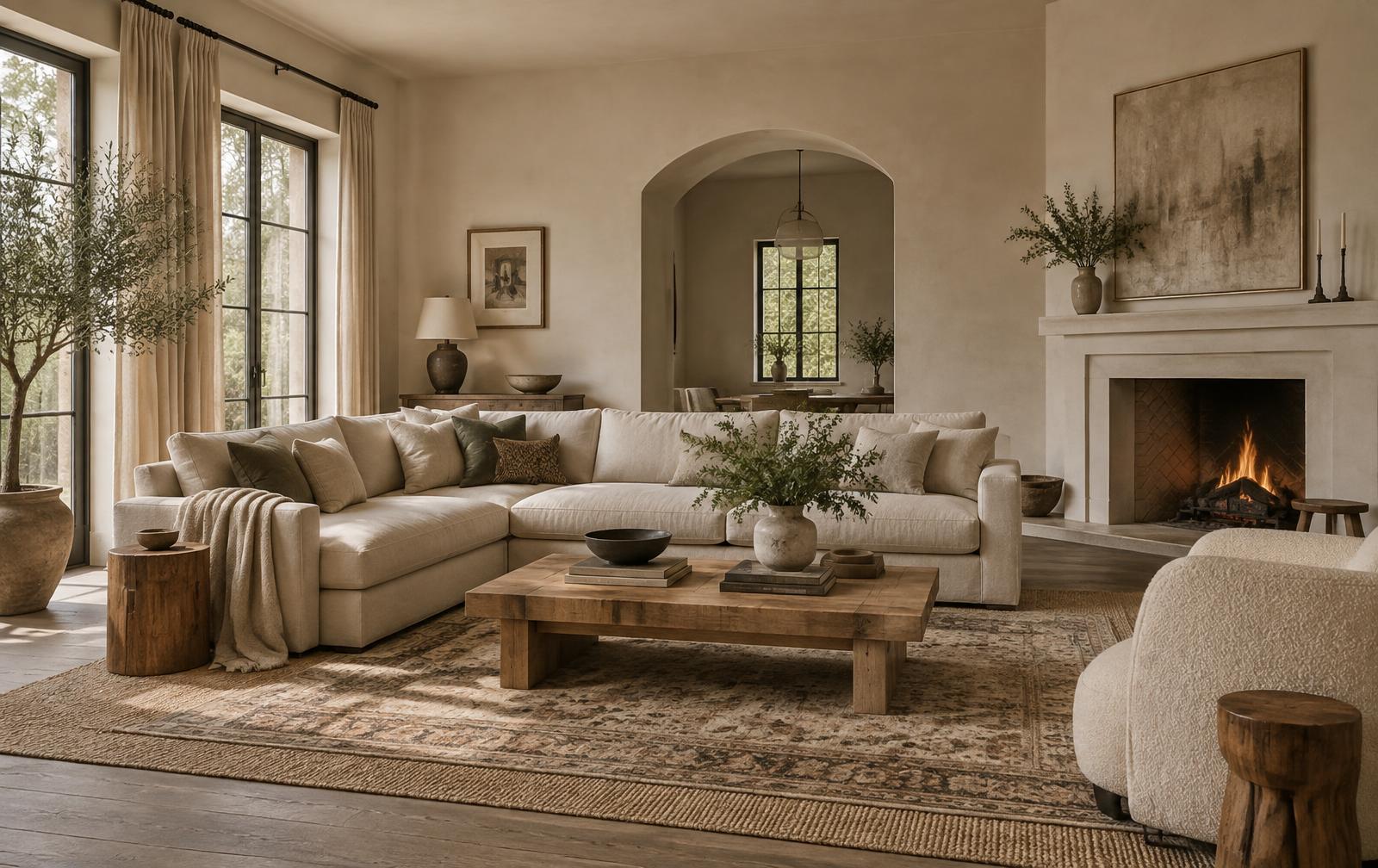
Minimal has a reputation problem: it sounds cold, white and stark, a style for people who do not own things. Warm minimal is none of that. The warmth in this room comes from its materials - the wood table, the wool throw, the brass candlestick, the linen sofa - and the edit removes the count of objects, not the warmth of them. A room with two loved zones in warm materials feels fuller than a crowded room, because the eye can actually settle on what is there.
It is also not a shopping style. The moment minimal becomes a look you buy - a new vase in the correct shape, a new tray in the correct tone - it has stopped being an edit and become another layer. Everything in this guide was already in your house. And it is not empty: empty is a room with nothing in it. This is a room with exactly enough in it, in exactly two places, with light doing the rest.
The one-afternoon order
First, the surfaces - about forty-five minutes. Everything off, three piles, three objects back per surface, half of each surface left empty.
Second, the zones - about thirty minutes. Choose your two, gather the seasonal moment into them, and clear everything seasonal from everywhere else.
Third, the light - about fifteen minutes. Warm bulbs checked, one lamp moved to the dark corner, one candle placed on the tray.
Last, the doorway test. Stand where a guest will stand, in the doorway, and look at the room the way they will see it. Your eye should land on the two zones, travel across clear surfaces, and rest. If it keeps jumping, something is still competing - take one more thing away. The edit is finished not when nothing more can be added, but when nothing more needs to be.
By Thanksgiving, the living room will not look decorated. It will look calm - two warm zones, clear surfaces, and a glow that comes from the light instead of the objects. Your guests will spend the whole evening in that room, and they will feel the difference without naming it. That is the whole point of less decor: the room stops asking for attention, and the people in it get it instead.
Frequently Asked Questions
How can I make my living room feel cozy without adding more decor?
Take things away instead. Clear the surfaces, keep two focal zones, and warm the light - a room with less in it and warm 2700K light feels cozier than a crowded room under a bright ceiling light.
How much of a surface should be left empty?
About 40 to 50 percent. The empty stretch is negative space - the frame that makes the few objects you keep look chosen instead of stored.
What are focal zones in a living room?
The two places where the eye is meant to land - choose any two of the sofa, the coffee table and the mantel, group the seasonal pieces there, and let every other surface stay quiet.
Is minimal decor too cold for fall?
Not when the materials stay warm. Keep the wood, wool, brass and linen, and remove the number of objects, not their warmth - warm minimal is an edit, not a white room.
How long does a living room edit take?
About ninety minutes on one afternoon: forty-five for the surfaces, thirty for the zones, fifteen for the light - and nothing to buy.
Written by
Decorating Editor
Rae Bennett is the decorating editor at The Curated Interior, where she writes practical guides to color, texture and warm, collected rooms.
Related Stories
How to Layer a Living Room: Rugs, Lighting and Texture
A practical guide to balancing tactile materials, grounded furniture and warm pools of light.
Eleanor Vance · Nov 13, 2026
A Quiet November Mantel: Edit Your Fall Mantel for Hosting Season
Remove the Halloween layer, keep the warm anchor, and make one quiet swap - a November mantel edited for hosting, not redecorated.
Rae Bennett · Nov 3, 2026
A Cozy Reading Nook for November's Dark Evenings
When the evenings darken an hour earlier, you do not need a new room - just one good chair, warm light, and a corner that is always ready for a book and a cup of tea.
Rae Bennett · Nov 1, 2026
More From Rooms
A Christmas Dining Table That Stays Warm After Thanksgiving
The changeover weekend's second day belongs to the dining table: one plaid runner, a low evergreen centrepiece, brass candlesticks and cream plates - dressed in one morning, from things the house already owns.
Rae Bennett · Nov 28, 2026
A Warm November Bathroom Shelf: One Surface Before Guests Arrive
Thanksgiving is four days away. One shelf is all a guest will really see - fold the towels one way, set a tray of essentials, and leave a third of it empty.
Rae Bennett · Nov 21, 2026
A Thanksgiving Kids' Table: Small, Warm and Their Own
Thanksgiving is five days away. Give the children a table that is theirs, not a smaller copy of the adults' - kraft paper to draw on, dishes that cannot break, and one simple activity to keep them there.
Rae Bennett · Nov 21, 2026
The Curated Note
A weekly letter on rooms, materials, and the details that make a home feel considered.
One edition each week: a room we're studying, a decorating principle worth borrowing, and the materials we keep returning to. No noise, no selling.
Discussion
Loading comments…